1816 — 1840s
Foundation and Growth
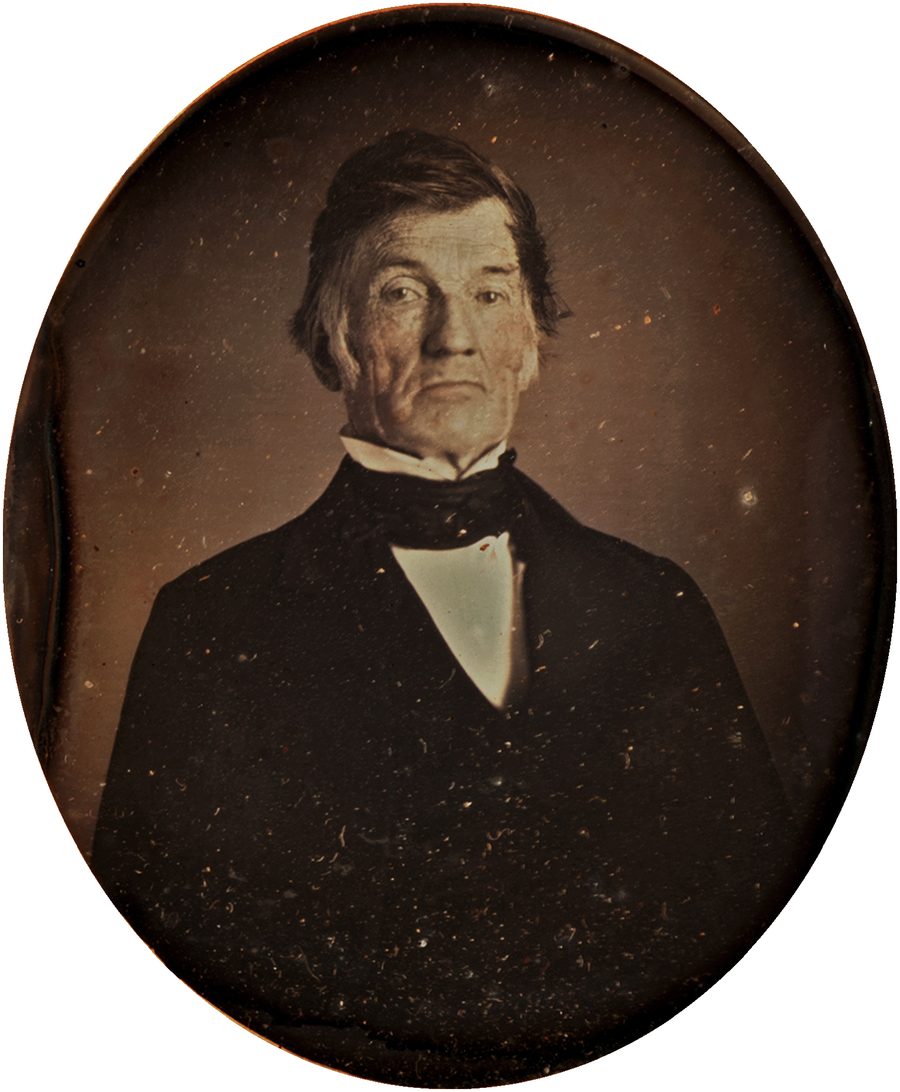
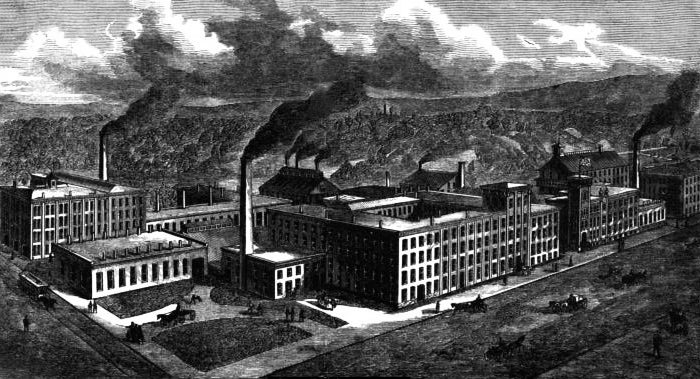
Eliphalet Remington II begins barrel-making at Ilion Gulph, New York. E. Remington & Sons becomes a supplier of barrels and complete arms, expanding steadily through the 1830s and 1840s alongside the Erie Canal economy.
1845 — 1865
Arsenal of the Union
The company wins its first major U.S. government contracts and becomes a critical supplier during the Civil War, producing rifles and the celebrated Remington New Model Army revolver. Ilion grows into a company town in the fullest sense.
1865 — 1888
The Rolling Block Era — and the Typewriter
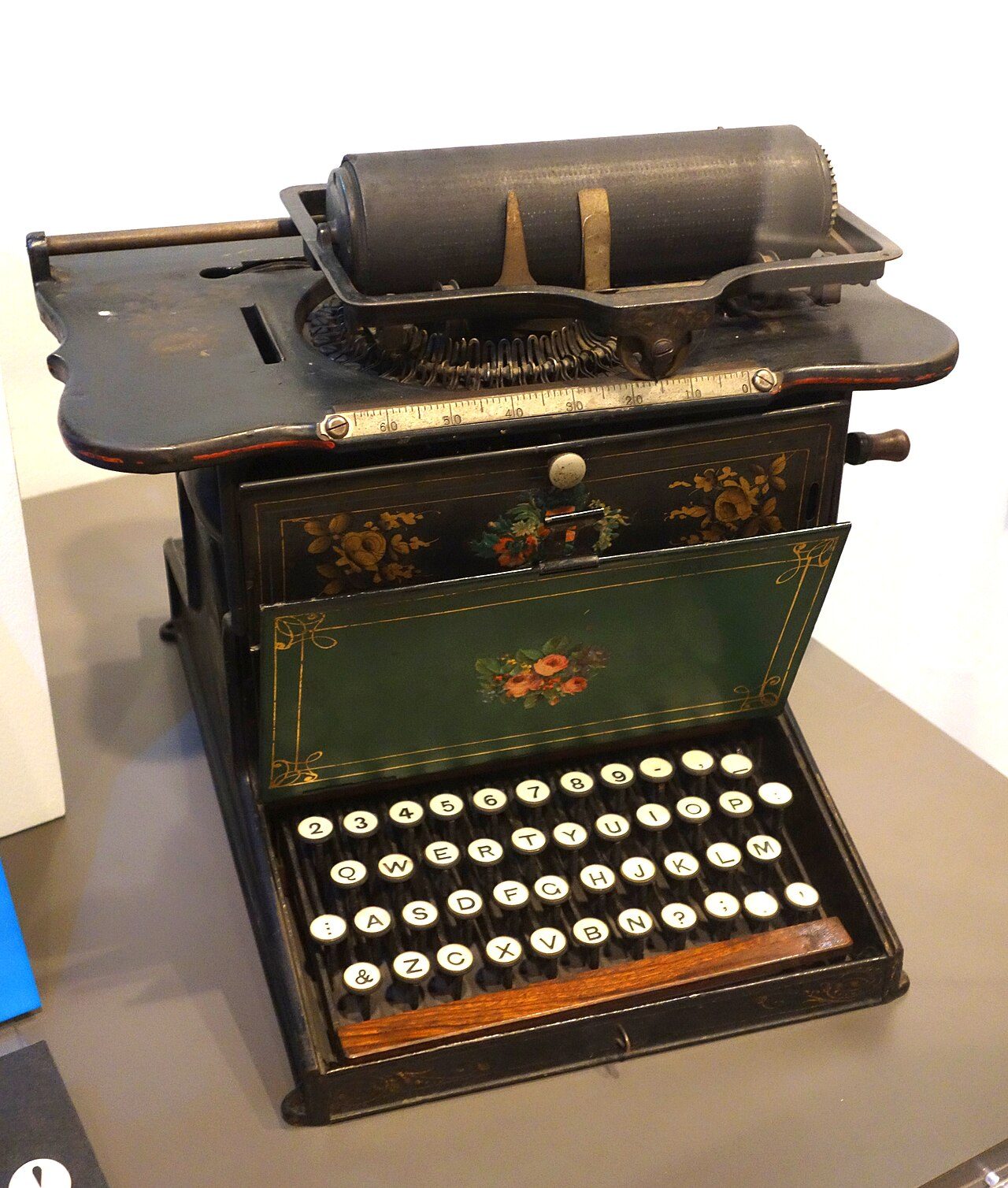
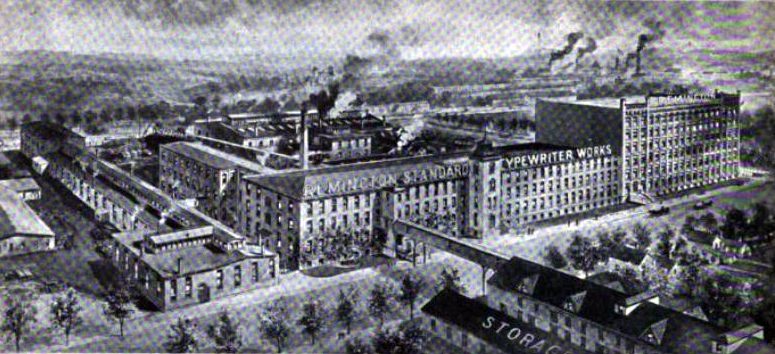
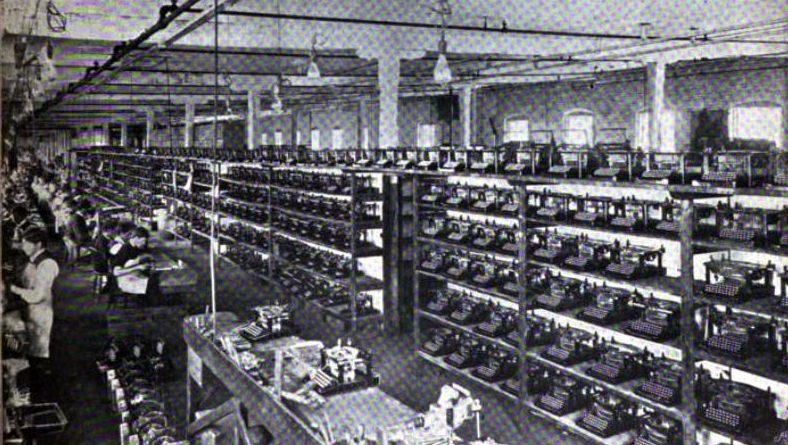
The Remington Rolling Block rifle becomes one of the most widely used firearm actions on earth, adopted by governments on nearly every continent. In 1873, the company begins manufacturing the Sholes & Glidden Type-Writer — the first commercially successful typewriter, which introduces the QWERTY keyboard to the world. Sewing machines and agricultural equipment follow, making Remington a diversified manufacturer decades ahead of its time.
1888 — 1912
Reorganization and the UMC Merger
After financial difficulty, the firm is reorganized as the Remington Arms Company. In 1912 it joins with the Union Metallic Cartridge Company of Bridgeport, Connecticut — creating Remington UMC and uniting firearm and ammunition manufacture under one name.
1914 — 1945
Service in Two World Wars
Remington plants run around the clock in both world wars, producing military rifles — including M1917 Enfields and M1903 Springfields — plus billions of rounds of ammunition for the United States and its allies. Employment at the company’s works reaches historic peaks, and wartime service becomes a defining chapter of community identity in Ilion and beyond.
1933 — 1993
The DuPont Decades
E.I. du Pont de Nemours acquires a controlling interest in 1933. Under DuPont stewardship, Remington introduces some of the most successful sporting arms ever made — the Model 870 pump shotgun (1950), which becomes the best-selling shotgun in history; the Model 700 bolt-action rifle (1962); the Model 1100 autoloading shotgun (1963); and the innovative Nylon 66 rifle (1959). Remington firearms become a fixture of American sporting life.
1993 — 2018
Private Equity and the Freedom Group
DuPont sells Remington to investment interests in 1993. In 2007, Cerberus Capital Management acquires the company and assembles it with other brands into the Freedom Group (later Remington Outdoor Company). Debt from the roll-up strategy weighs on the business through the 2010s.
2018 — 2020
Two Bankruptcies
Remington Outdoor Company files for Chapter 11 protection in 2018 and again in 2020. In the 2020 case, the company’s assets are sold in parts: the ammunition business and Remington trademark interests go to Vista Outdoor; Marlin goes to Sturm, Ruger & Co.; and the firearms business — including the historic Ilion plant — is acquired by Roundhill Group LLC, which begins operating it as RemArms, LLC.
2021 — Present
The Georgia Era
In November 2021, RemArms and the State of Georgia publicly announce the relocation of the firearms business to LaGrange, Troup County, Georgia, with a stated commitment of 856 jobs over five years. The Ilion plant — the company’s home for over two centuries — ceases production in early 2024. The LaGrange chapter, and the litigation now surrounding it, is documented in the Current Events and Case Timeline sections of this site.